

If you are planning an N2O monitoring setup, one of the first practical questions is what the system consists of and how the parts connect. From a single sensor in a tank to a full plant feeding data into your control system. This overview walks you through the 3 components of the N2O Wastewater System 3.0 and how they fit together.
You can also rewatch our Webinar "A Quick Look at N2O Wastewater System 3.0" for a 30 min. introduction to the new generation.
The system at a glance
The system is made up of 3 components that each play one clear role:
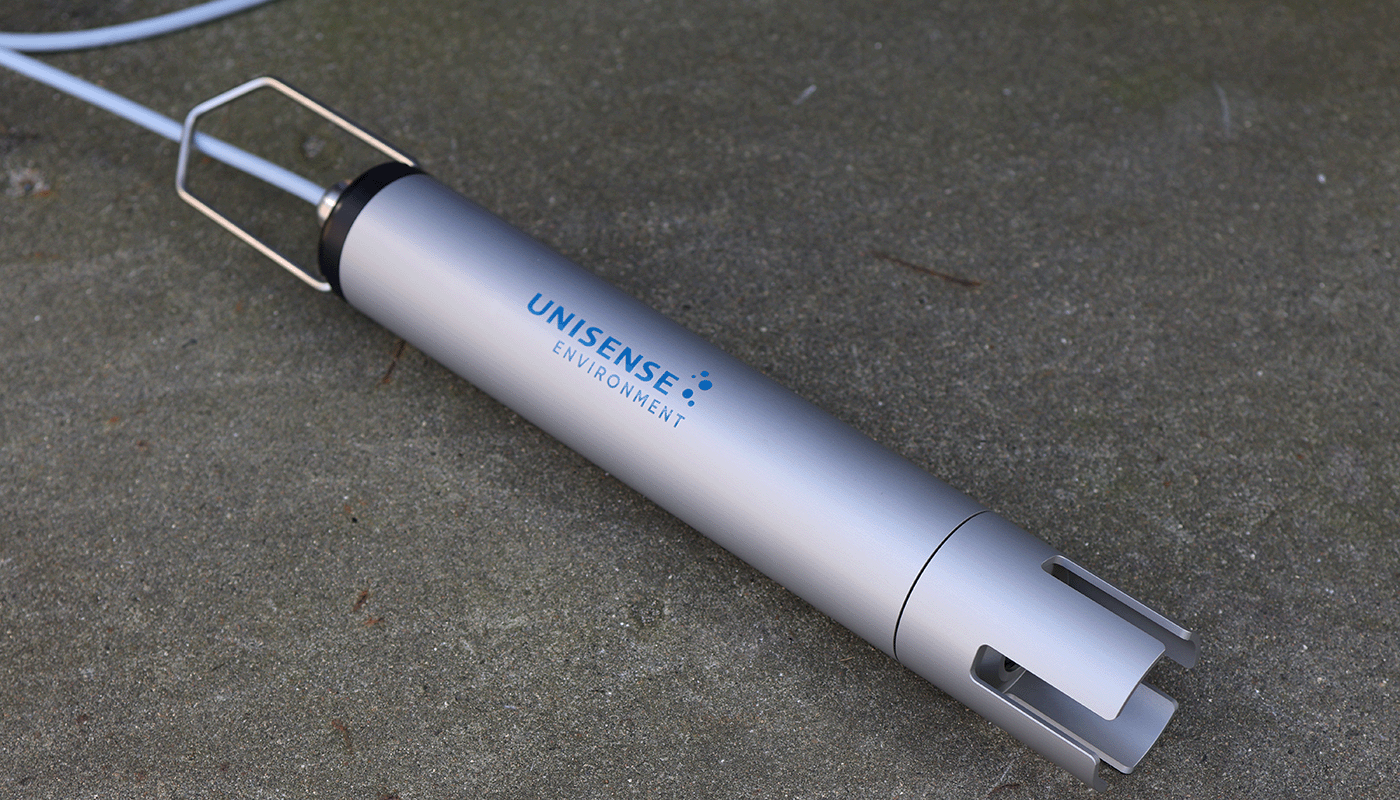
- The N2O Wastewater Sensor measures dissolved N2O directly in the biological process.
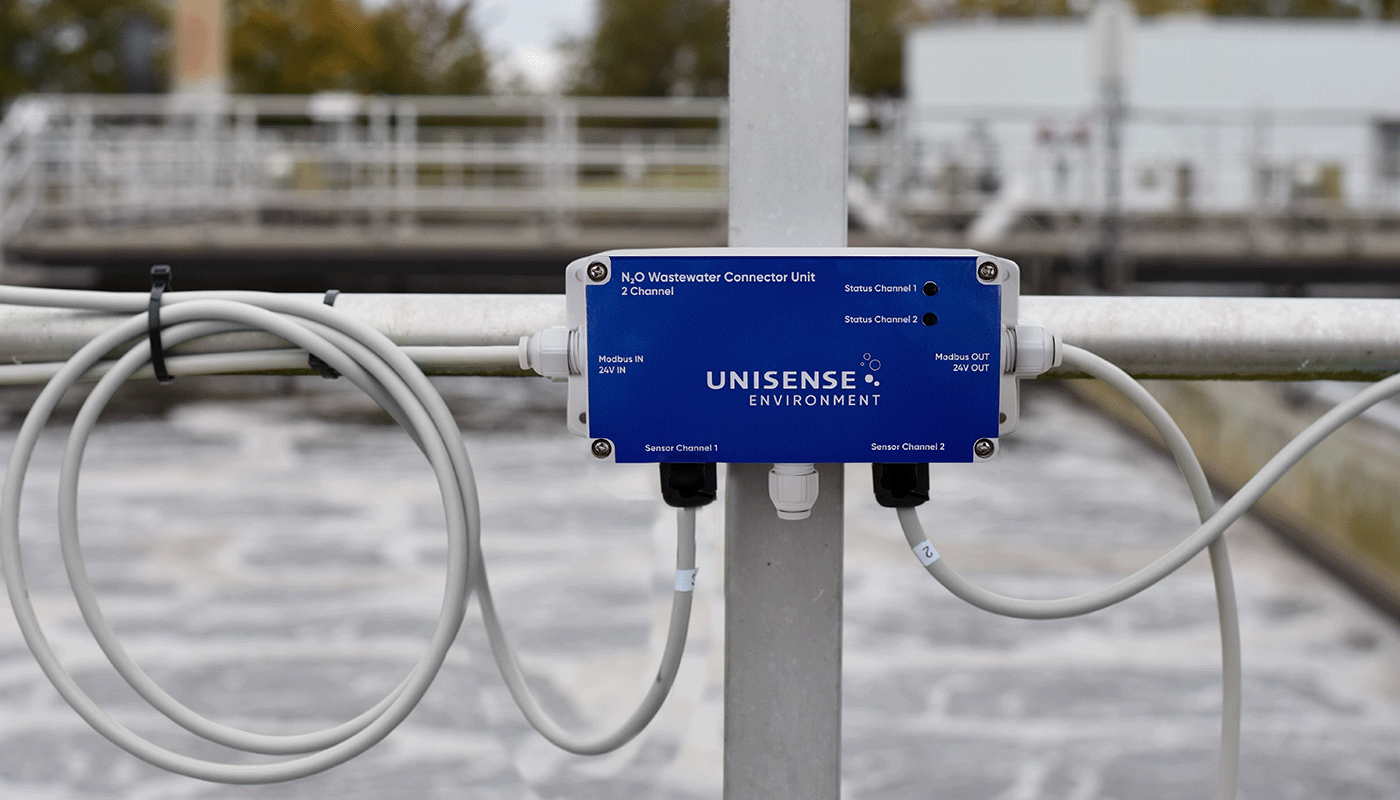
- The N2O Wastewater Connector Unit sits close to the sensors, connects them to the system, and is where you calibrate without a screen.
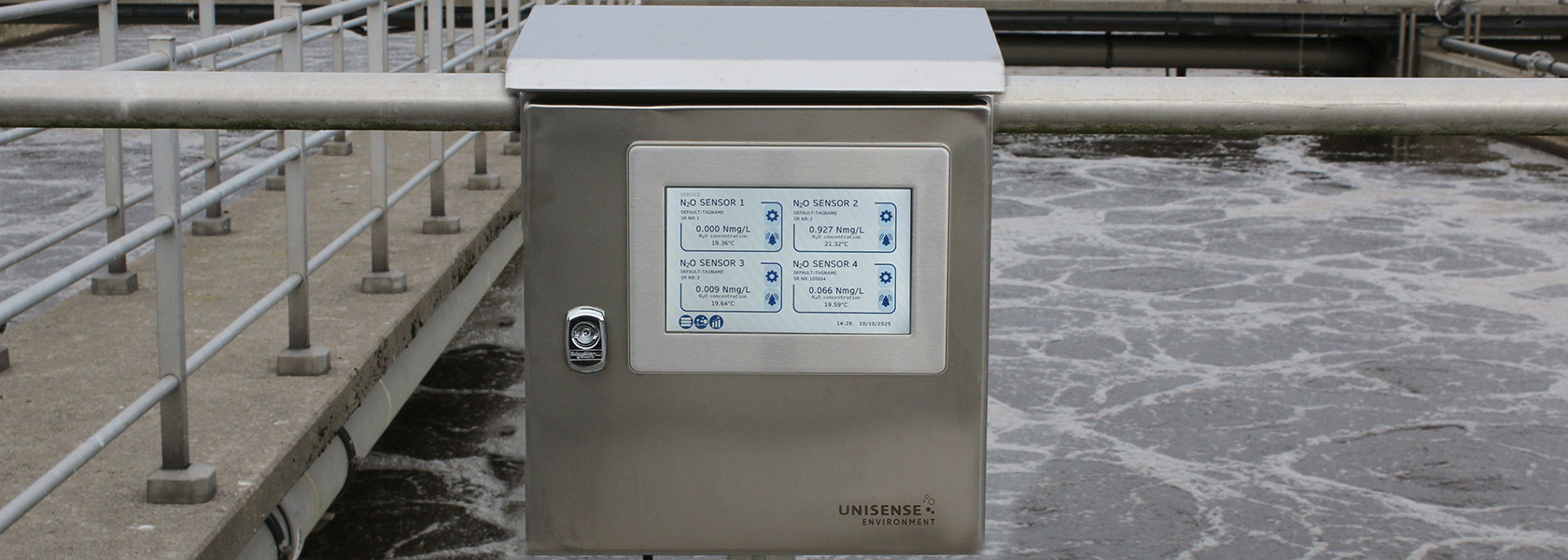
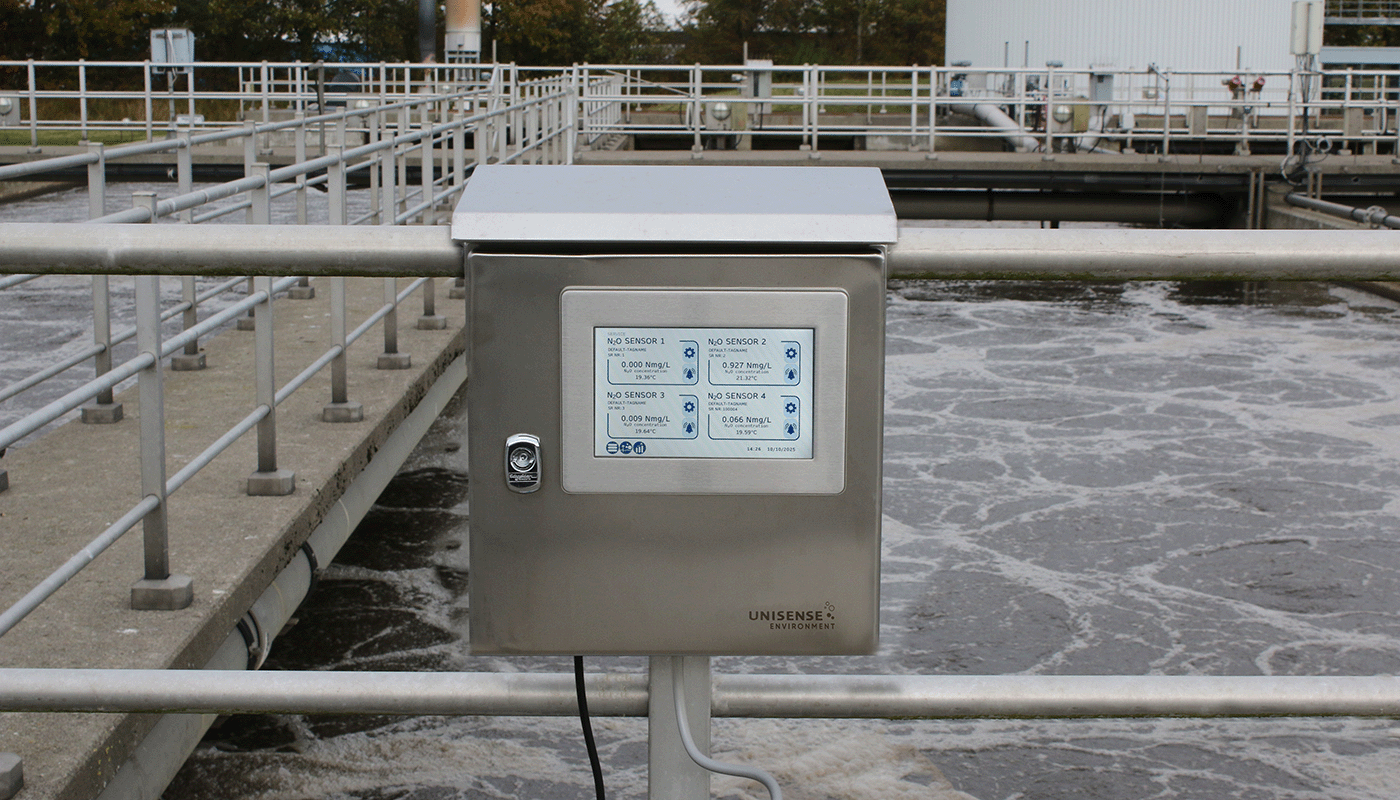
- The N2O Wastewater Operator Console is the hub that collects the data, shows it in real time, and passes it to your control system.
The signal path is straightforward: Sensors connect to a Connector Unit, Connector Units connect to the Operator Console, and the Console connects to your SCADA or PLC.

1. The N2O Wastewater Sensor: measuring in the process
The sensor measures dissolved N2O directly in the liquid phase, giving you representative data across anaerobic, anoxic, and aerobic zones, so you can follow both where N2O is produced and where it is reduced. It is built for the realities of wastewater, where foam, condensation, and fouling are part of normal operation.
In the new generation, the N2O Wastewater Sensor is fully digital. Calibration data, usage history, and sensor settings are stored on the sensor itself, so you can move a sensor or replace a sensor head without losing its setup or history. You are notified when it is time to calibrate or change the sensor head, so maintenance does not depend on manual checks.
2. The N2O Wastewater Connector Unit: operation close to the process
Each Connector Unit sits near the sensor it serves and connects up to two of them. It handles communication and signal transfer between the sensors and the Operator Console, and it is one of your options for calibration.
Calibration is screenless and guided by LEDs on the Connector Unit. You run the full procedure at the tank, following clear visual cues. No screen, controller, or menu navigation needed. Because the Connector Units install close to the sensors and link back to one Console, you can route cables around tanks and structures and place sensors where they give you the most useful data.
3. The N2O Wastewater Operator Console: one place for the whole picture
From the Operator Console you see every sensor in one place: live and historical data, sensor status, calibration, and the data is logged continuously for you. One Console manages up to 16 sensors, connected through their Connector Units.
For integration, the Console uses standard outputs, 4–20 mA and Modbus TCP/IP, to pass N2O data directly into your existing PLC or SCADA setup, without extra programming, subscriptions, or a mandatory cloud platform. You can also choose ProfiBus-DP as an option.
Send us a message. We will answer within one workday.
If we are online and available to chat, you can also click the blue icon to the right.